The Difference Between a Ghawazi, an Almeh, and a Professional Dancer
Today’s topic aims to clarify the differences between the Ghawazi, the Almeh, and the professional dancer, as there are distinct distinctions between them:
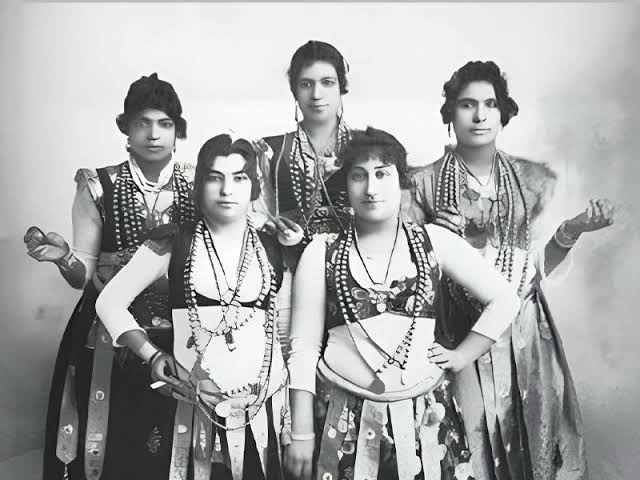
The Ghawazi
The Ghawazi are often referred to as gypsies or nomads and trace their roots back to the “Mazeen” tribe from the Maghreb (Northwest Africa). They spread throughout the Arab world, branching into various groups such as the “Hanjaria,” who are known for fortune-telling, magic, and dancing. In Egypt, the Ghawazi can be found in areas like Sanbat (in the Gharbia governorate) and parts of Cairo, such as Arab Al-Mohammedi. Some are also in Sinai, particularly in Qantara East. The Ghawazi are known for their distinctive style of dress, typically a silk tunic with slits on the sides, often in shiny fabrics. They have long black hair, and many adorn themselves with golden jewelry, including a gold-capped tooth. Their dancing style involves swaying in front of musicians to capture the audience’s attention. A key characteristic of the Ghawazi is that they never perform solo—there are always at least three dancers forming a group. Their fees are usually reasonable since bookings are made for the group rather than an individual.
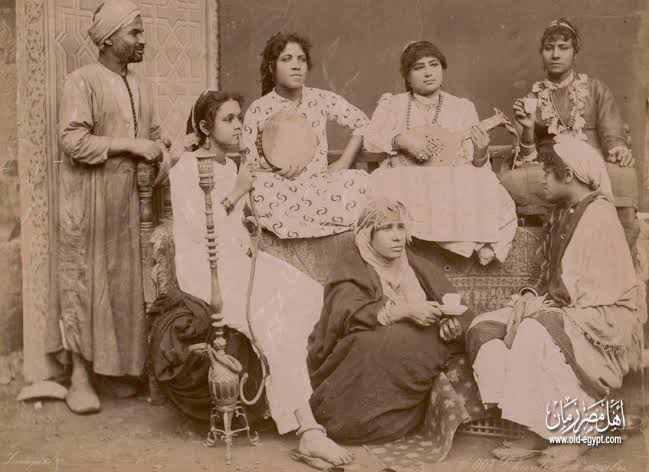
The Almeh
The Almeh, unlike the Ghawazi, is often a performer who can sing and dance, typically under the tutelage of a senior Almeh. She is often accompanied by younger performers who work alongside her. The Almeh usually wears evening gowns or short dresses and relies heavily on showcasing her charms to engage the audience. Their performances involve interaction with the spectators, who may encourage them by throwing money. Unlike the Ghawazi, the Almeh may wear a traditional belly dance costume or a local “tobe” (traditional dress) during her performance. They are typically found in areas like Mohamed Ali Street, Bab Al-Shariya, and Kitkat in Imbaba, and their fees are often higher due to their role in attracting more “tips” from the audience.
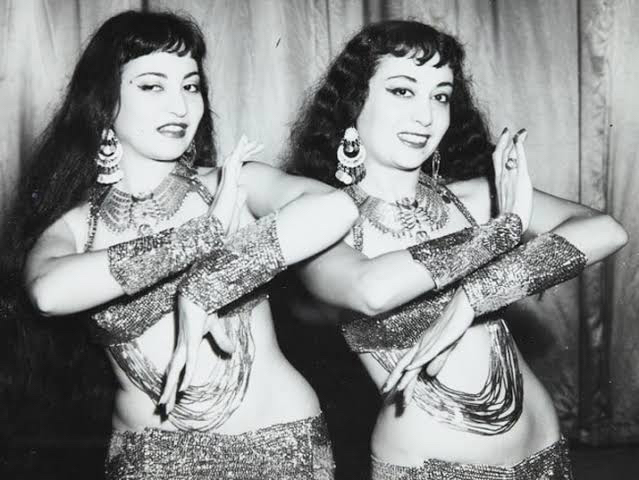
The Professional Dancer
The professional dancer wears a full belly dance costume and performs with her own musical ensemble. Her performance time is usually around 45 minutes, referred to as a “set.” A typical set involves starting in a belly dance costume and then changing into a different outfit, often a “tobe” or another traditional garment. Professional dancers perform solo, and their fees are determined by their level of fame. Booking is typically handled by a talent agent or artist promoter, and they must hold a performance permit issued by the authorities.
With these clarifications, it becomes easier to distinguish between a Ghawazi, Almeh, and professional dancer. Interestingly, these three groups harbor deep animosity towards one another, so much so that calling a professional dancer a “Ghawazi” is considered a serious insult.
 KHALIL KHALIL